

 06-July-2026
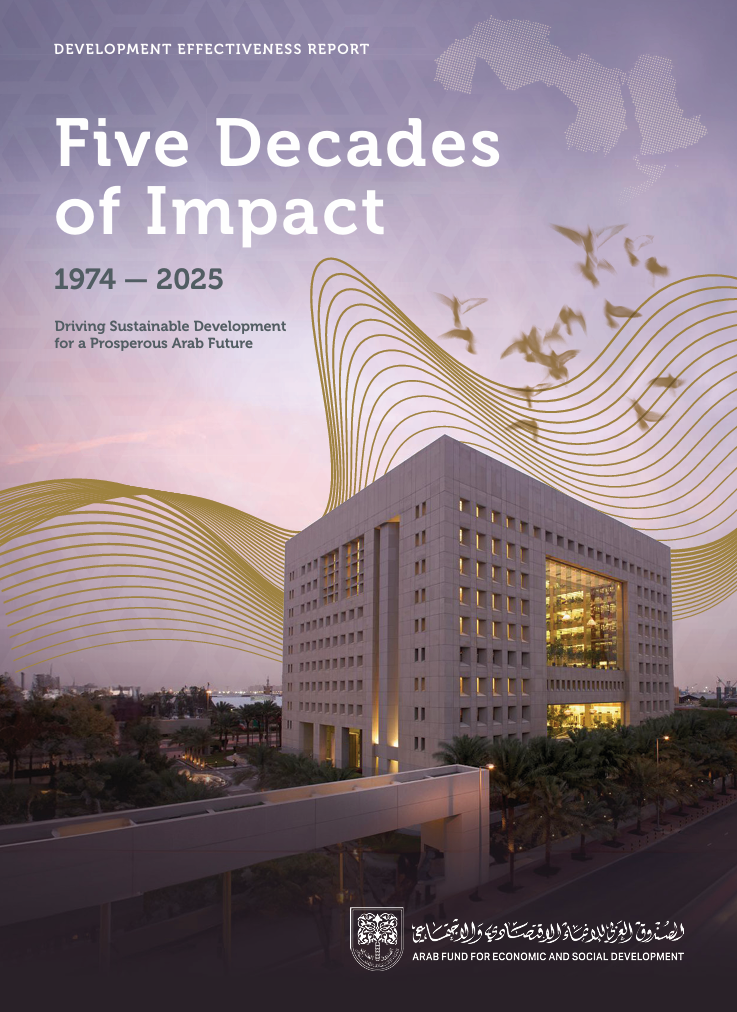
ٍState of Kuwait, Kuwait City, July 6, 2026 – The Arab Fund for Economic and Social Development (Arab Fund) today released its first Development Effectiveness Report to showcase fifty years of economic and social transformation across 18 member countries. The report "Five Decades of Impact," marks a new institutional benchmark for measuring results, paving the way to an impact-based development approach. It maps five decades of public and private sector loans, grants, and emergency relief packages, and underscores its support during times of economic challenges and crises. Since launching operations in 1974, the Arab Fund has financed large-scale regional projects, providing KWD 11.5 billion (USD 37.3 billion) in loans to fund over 618 critical development projects. This loan portfolio spans across sectors such as energy, transportation, water and sanitation, agriculture, education and healthcare services. The Arab Fund also extended 1,367 grants valued at KWD 278.5 million (USD 905.1 million) to develop human capital, strengthen institutional capacity, and help Arab countries maintain resilience during crises. Even before the UN officially adopted the Sustainable Development Goals in 2015, the Arab Fund was already supporting Arab countries to achieve these goals through well-designed interventions that aligned with each member country’s development priorities. Recognizing that reliable, high-quality access to basic services is essential, the Arab Fund allocated 22.5% of its portfolio to clean energy (SDG 7) to support the region's power transition. Additionally, it directed 20.5% to improve roads and transport (SDG 11), and 17.3% to secure clean water and sanitation (SDG 6) to help combat regional water scarcity. Beyond physical infrastructure, the Arab Fund targeted the social infrastructure required to maximize the impact of its projects. It addressed immediate community needs by dedicating 7.9% of its portfolio to achieving zero hunger (SDG 2), 6.8% to poverty reduction (SDG 1), and 4.1% to creating decent work and economic growth (SDG 8). Recognizing that small and medium-sized enterprises (SMEs) are the backbone of Arab economies, the Arab Fund successfully mobilized KWD 138.4 million (USD 450 million), supporting over 50,000 small businesses and sustaining more than 120,000 regional jobs, through its specialized Badir Fund for Developing SMEs. The Arab Fund also provided urgent supports to its Member countries affected by natural disasters or crises through targeted humanitarian grants, having benefited Lebanon, Libya, Morocco, Sudan, Syria, and Yemen. Most notably, its Urgent Program to Support the Palestinian People stands as one of its longest-running commitments with more than KWD 255.5 million (USD 830.4 million) sustaining critical electricity, water, health, education, and agriculture services in Palestine. Finally, the report highlights how the Arab Fund empowers regional policymakers with evidence-based research and region-focused statistics. In addition to its Fellowship for Academic Excellence Program, which provides grants to support advanced research and knowledge transfer by Arab Ph.D. holders during their stays in prestigious universities, the Arab Fund support to knowledge institutions include: - The Economic Research Forum (ERF): drives high-quality independent economic research for sustainable development; - The Arab Planning Institute (API): advances national capacity building and development consultancy; - The Arab Institute for Training and Research in Statistics (AITRS): strengthens national statistical offices across the Arab League; and - The Abdus Salam International Centre for Theoretical Physics (ICTP): focusses on advancing physical and mathematical sciences.
Click here to read the report.
About the Arab Fund:
The Arab Fund for Economic and Social Development is a regional financial institution based in Kuwait, established in 1968 to support the economic and social development of Arab countries. Through loans, grants, and technical assistance, the Arab Fund finances infrastructure, education, health, water and sanitation and public service projects that contribute to sustainable development and regional cooperation across the Arab world.

📞 For Media inquiries, please contact: Mohamed Eissa, [email protected]